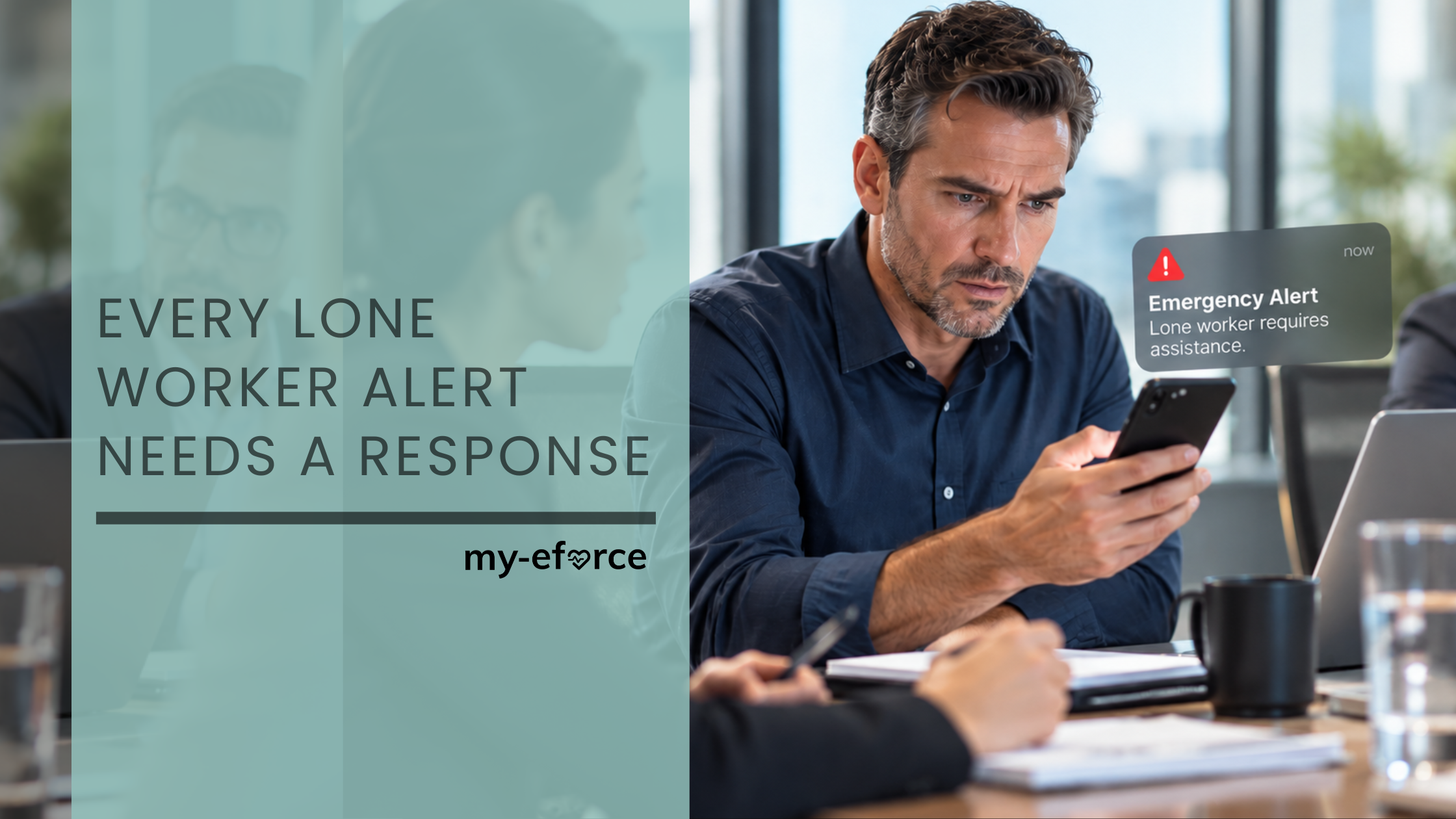
Most lone worker safety solutions are very good at doing one thing: Generating an alert.
But the alert is actually the easy part. The harder question is what happens next.
Imagine an employee working alone at 2:00 in the morning. They fall, they're injured and they're unable to respond. Their safety technology detects the event and generates an alert. Now what?
An alert doesn't assess what's happened. It doesn't determine whether the employee is safe. It doesn't decide whether the situation needs to be escalated. And it doesn't coordinate the response.
Someone still needs to do those things.
For some lone worker safety solutions, that responsibility falls back on the employer. A manager, supervisor or colleague receives the notification and becomes responsible for figuring out what happens next.
That raises an uncomfortable question: What if they don't see it? At 2:00 in the afternoon, they may be in a meeting. At 2:00 in the morning, they may be asleep.
Either way, employee safety shouldn't depend on someone happening to check their phone.
Modern safety technology has become incredibly good at recognizing when something may be wrong.
Smartphones and smartwatches can help detect falls, crashes and other supported events. Employees can trigger an SOS. Timers can automatically generate an alert when it expires.
But detection and response are two different things. Detection identifies the problem. Response does something about it. And that's why my-eforce puts professional 24/7 emergency support behind its lone worker safety technology, with contact directly to 911.
When an emergency alert is triggered, the response process doesn't simply get handed to your internal team. Alerts can be verified and assessed, and emergency services can be contacted when escalation is required.
This is where the distinction becomes even more important. In a serious emergency, an employee may be unconscious, disoriented, injured or otherwise unable to explain what's happened.
my-eforce can provide Emergency Support with information associated with the alert, including available GPS location and other relevant data, helping provide context when the employee may not be able to speak for themselves.
Automated alerts can also identify supported events such as falls or crashes, allowing the response process to begin even when an employee hasn't manually pressed SOS.
Lone worker safety shouldn't mean giving your managers another dashboard to watch or making them responsible for coordinating emergencies. Their job is to manage their people. Not become a 24-hour emergency response centre.
With my-eforce, the technology employees carry is backed by professional emergency support operating around the clock.
So when you're evaluating a lone worker safety solution, go beyond asking whether it can generate an alert. Ask what happens after it does. Because lone worker safety requires a response.


