For years, workplace safety technology has been marketed around one simple promise: "Press the panic button if something goes wrong."
But here's the uncomfortable truth. A panic button doesn't actually solve an emergency. It actually starts one.
The real question isn't whether an employee can send an alert. It's what happens after they press it.
For lone workers like home builders and REALTORS®, that distinction matters more than ever. Sales consultants welcome complete strangers into show homes every day. REALTORS® meet new clients at vacant properties, open houses and private viewings. Many work evenings, weekends and alone.
These aren't construction sites. Yet they're still lone worker environments. If your safety solution ends with a notification, you're only solving half the problem.
Many organizations believe they're protected because employees carry a panic button or have an SOS feature on their phone. But pressing a button is only the first step.
What happens next?
Those questions create uncertainty during the moments when certainty matters most. A true emergency response system removes that uncertainty by ensuring every alert leads to immediate action - not simply another notification waiting for someone to respond.
Construction sites are built around safety, but show homes often aren't. Yet sales professionals regularly work alone with members of the public they have never met before.
They open doors to strangers. They host appointments after hours. They spend long periods without colleagues nearby.
That's why show home safety deserves the same level of attention as construction site safety. The safest-looking workplace can still present significant personal safety risks.
The real estate industry has become increasingly aware of personal safety risks.
Many brokerages AND home builders encourage sales agents to:
These are all good practices. But relying solely on another person to notice a missed check-in isn't the same as having a professional emergency response process.
Effective REALTOR® safety combines smart safety habits with technology that can escalate an emergency immediately when needed.
That's where a modern lone worker safety app becomes much more than a panic button.
Today's home builders invest heavily in protecting construction crews through policies, PPE and site safety procedures. But sales consultants, warranty representatives, customer care teams and leasing professionals often spend much of their day working independently.
Modern home builder safety needs to extend beyond the construction fence. It should protect every employee working alone - whether they're in a show home, visiting customer properties or travelling between appointments.
The goal isn't simply notifying someone that an emergency exists. It is making sure help is already on the way.
Not all safety solutions are built the same. When evaluating a lone worker safety app, ask whether it includes:
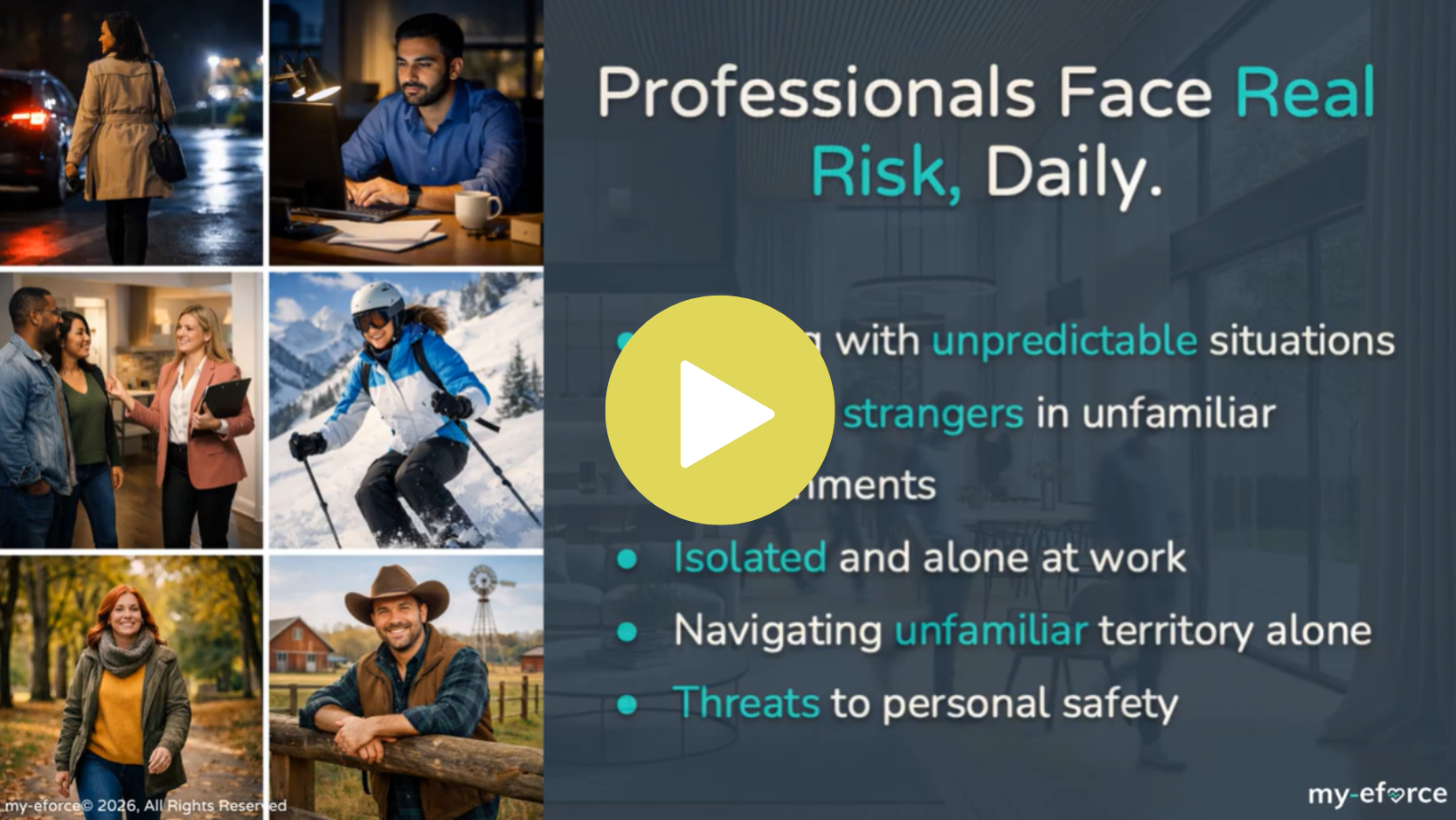
The difference between an alert and a response can be measured in minutes - and sometimes those minutes matter most. Watch how my-eforce transforms a simple alert into a real emergency response system - because what happens after SOS is what matters most.
The conversation shouldn't begin with panic buttons. It should begin with emergency response, because employees don't need another notification.
They need confidence that if something goes wrong, someone is already taking action. Whether you're focused on show home safety or improving REALTOR® safety, the most valuable investment isn't another alert. It's a safety solution designed to deliver a real response when it matters most.


